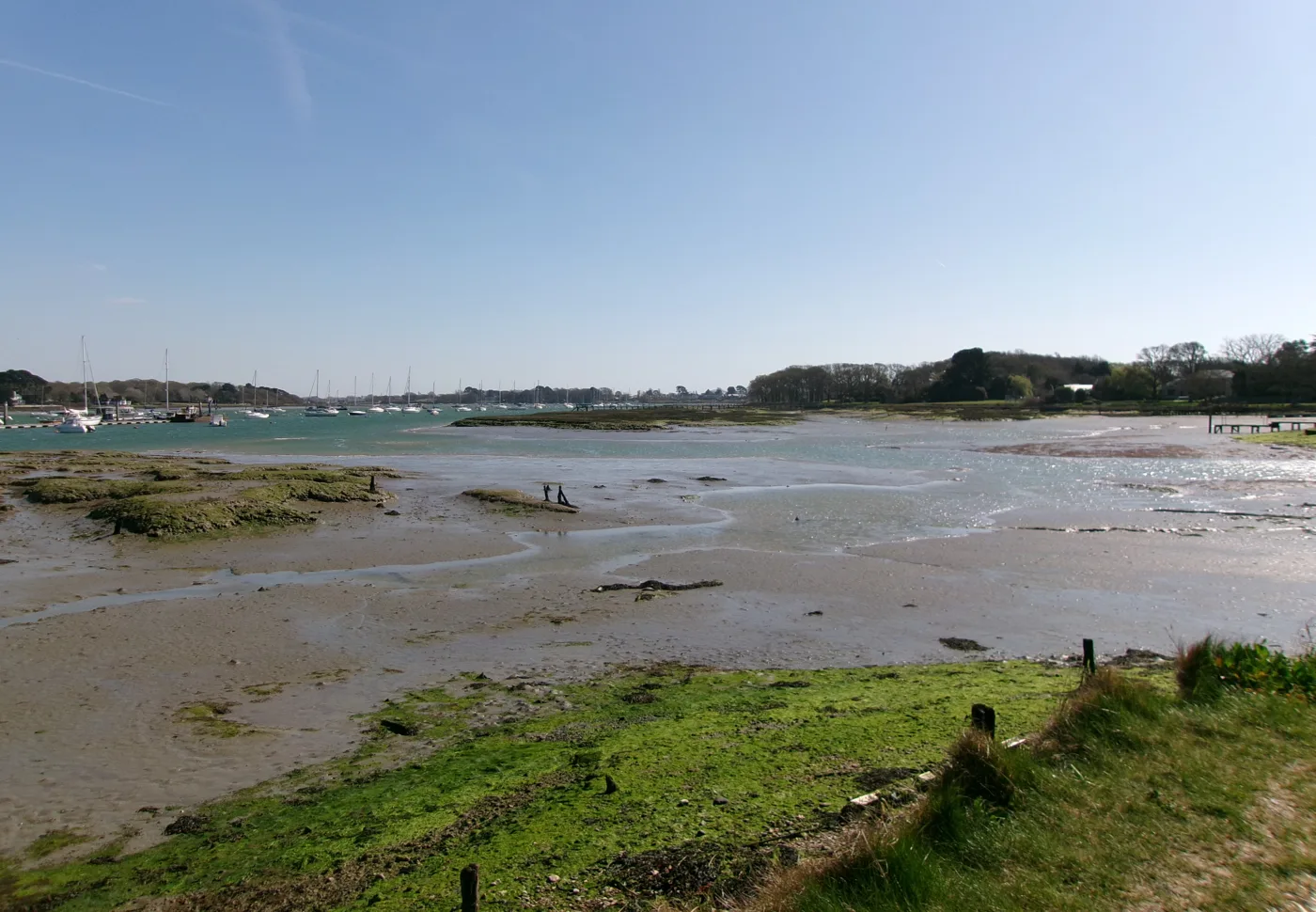

The rulebook for 9,000 boats in Chichester Harbour was confirmed in 1973. The Conservancy is replacing it, and its survey of harbour users closes on 30 August.
The rules that govern how boats move around Chichester Harbour were confirmed by the Secretary of State on 11 June 1973. Chichester Harbour Conservancy now wants to replace them, and it is asking the people who use the water what the new rules should say.
The survey closes on Sunday 30 August. That leaves eleven days.
The Conservancy calls this its statutory five-yearly review of navigation. The output will be a new set of General Directions, which it describes as “the modern navigation rules that will replace the harbour’s ageing byelaws”. In its own words, they will set out:
- how vessels should navigate
- where certain activities take place
- how speed and wash are managed
- the safety expectations for all harbour users
They will be legally enforceable. The Conservancy is clear about the point of asking first: “They only work well when shaped by real experience on the water.”
What the 1973 rulebook actually says
The document still in force is The Chichester Harbour Byelaws, 1973. It was made under the common seal of the Conservancy after a meeting on 15 March 1973, and confirmed by an assistant secretary at the Department of the Environment on 11 June that year.
Two byelaws have been added since. Byelaw 30, on oyster dredging, was made in July 1979 and confirmed by the Minister on 21 January 1981. Byelaw 29 was made in January 1992 and confirmed on 4 March 1992. Nothing in the printed rulebook is more recent than that.
Some of what it regulates:
- Byelaw 5: no power-driven vessel may exceed eight knots through the water without the harbourmaster’s written consent. That is still the harbour-wide speed limit today.
- Byelaw 24: nobody may engage in “water-skiing, aqua-planing, or the like” without the written consent of the Conservancy.
- Byelaw 28: no digging for lugworm, ragworm or other bait within 50 feet of a mooring, or within 20 feet of a pile, beacon, hard, causeway, jetty or quay.
- Byelaw 30: no oyster dredging between sunset and sunrise.
- Byelaw 23: no sounding a siren, steam hooter, trumpet or distress rocket except in connection with navigation or distress.
The list is a fair snapshot of what a harbour authority worried about in 1973. It is not a snapshot of the harbour now. The Conservancy’s own description of the water today lists the popular activities as “rowing, canoeing and paddleboarding to wing foiling”. None of those words appear in the byelaws.
Why the rules can change at all
Byelaws are slow. Each one in that 1973 document had to be made by the Conservancy and then confirmed by a Secretary of State, which is why byelaw 30 took from July 1979 to January 1981 to come into force.
General Directions are a different power. Section 40A of the Harbours Act 1964 lets a designated harbour authority give directions covering the movement of ships, mooring and unmooring, equipment, and the manning of ships. That section was inserted on 1 October 2013 by the Marine Navigation Act 2013. It did not exist when the byelaws were written.
The Conservancy has been the harbour authority for the combined harbours of Chichester and Emsworth since the Chichester Harbour Conservancy Act 1971. Its members are drawn from West Sussex County Council, Hampshire County Council, Chichester District Council, Havant Borough Council and the Advisory Committee.
The scale of what is being regulated
The Conservancy’s own figures for the harbour:
| Feature | Figure |
|---|---|
| Water area | 11 square miles |
| Marked and lit channels | 17 miles |
| Vessels | more than 9,000 |
| Moorings | over 3,000 |
| Berths | 2,000 |
| Marinas | six |
| Sailing clubs | 14 |
The harbour-wide speed limit is eight knots. Ebb tides at the entrance can reach six knots on springs, and a survey of Chichester Bar completed in May 2024 found a least depth of 1.1 metres below chart datum, against the roughly 1.5 metres the bar is normally dredged to. Those are the conditions any new rulebook has to work in.
What it means for you
If you sail, race, moor, paddle, swim, fish or run a business on the water, this is the stage at which the rules are still being shaped. The Conservancy says the survey happens “before anything is drafted”.
- Deadline: Sunday 30 August 2026.
- Time needed: about 15 minutes, by the Conservancy’s estimate.
- Format: mostly tick boxes, and every question is optional. You can answer only the sections that apply to you.
- Where: the form is linked from the Conservancy’s navigation review announcement.
- Privacy: responses are treated in confidence. Questions about how the information is used go to info@conservancy.co.uk.
If you do nothing, the General Directions will still be drafted. They will simply be drafted without your answer in the evidence.
Sources
- Chichester Harbour Conservancy, Help shape the future of navigation in Chichester Harbour, 6 August 2026
- The Chichester Harbour Byelaws, 1973 (PDF)
- Harbours Act 1964, section 40A, legislation.gov.uk
- Chichester Harbour Conservancy, On the Water and Navigation
- Chichester Harbour Conservancy, About Us
More from Chichester Live: roadworks and travel, things to do in Chichester and planning news.
Have your say