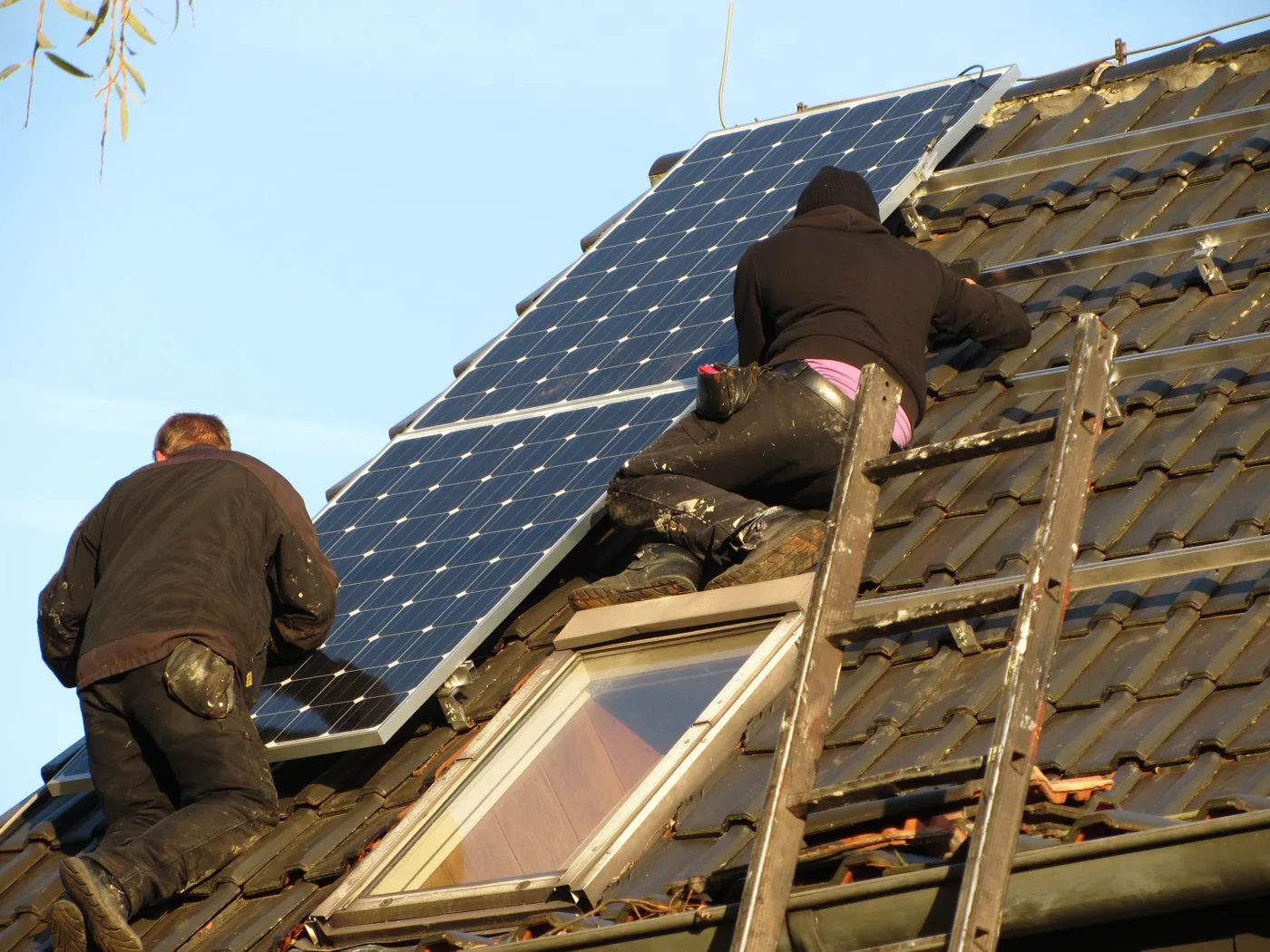

850 solar panels approved for seven St Richard's Hospital roofs on 21 August. Nobody objected, and the whole lot arrives in one 6am Saturday delivery.
Chichester District Council has granted planning permission for around 850 solar panels on the roofs of St Richard’s Hospital. The decision was issued on Friday 21 August 2026 under reference 26/00968/FUL.
The applicant is University Hospitals Sussex NHS Foundation Trust. It was decided by a case officer under delegated powers rather than by the planning committee, because nothing in the file gave anyone a reason to argue about it. No third party made a representation. The parish council made no comment. Not one consultee objected.
The panels go on seven separate roofs across the hospital site:
- the Maternity Block
- Stillman House
- the Catering Block
- the Clinical Treatment Centre, east and west
- the Fernhurst Centre
- the Diabetic Centre
What the council actually decided
The officer’s delegated report describes the scheme as “approximately 850 solar voltaic panels to serve the hospital complex”. It says the panels would fully cover several of the roofs, but “would not appear excessive or overly dominant”.
The site is not in a conservation area. It does sit in the setting of Chichester Conservation Area to the west, and of two grade II listed buildings, 41 Spitalfield Lane and 7 College Lane. The officer concluded the separation distance meant the setting of those buildings would be conserved.
Three technical objections that might have been expected did not arrive:
- Glare. The council’s environmental protection officer was satisfied that the height of the buildings and the position of the panels meant there would be no solar glare, and no noise problem at nearby homes.
- Highways. West Sussex County Council, as highway authority, found no unacceptable impact on road safety and no transport grounds to resist the scheme.
- Drainage. The lead local flood authority had nothing to add, because the panels sit on existing roofs and change nothing about surface water.
The site is in Flood Zone 1 but is recorded as at low to high risk of surface water flooding. The officer found the panels would not materially affect that either.
This is also one of the first Chichester decisions written under the rewritten national planning rules. The report notes that the revised National Planning Policy Framework took effect on 17 August 2026, four days before the decision was issued, and applies its new lettered policies S3 and S4.
The bats and the hedgehogs
The one thing that did generate conditions was wildlife. Old hospital roofs can hold bat roosts, so the trust commissioned a bat scoping report from The Ecology Co-op, dated 12 February 2026. It found the buildings ranged from negligible to moderate suitability for roosts. The council’s environment strategy officer accepted the findings.
The permission therefore requires the work to follow that report, plus two timing rules:
- Brush, compost or debris piles can only be removed outside the hedgehog hibernation period, which the condition defines as mid-October to mid-March inclusive.
- Tree work or vegetation clearance must happen outside the bird breeding season, 1 March to 1 October. If it has to happen inside that window, an ecologist must check the site within 24 hours beforehand, and any nest found must be protected until the young have fledged.
The environment officer also asked for bird, bat and hedgehog boxes as an enhancement. The case officer declined, saying that “given the scope of the development it is not considered reasonable to recommend these enhancements”. The scheme is exempt from the biodiversity net gain requirement because it affects less than 25 square metres of habitat.
What it means for you
If you use the hospital, the disruption looks small and it is unusually well documented. The trust’s construction methodology statement, submitted on 14 August and now written into condition 3, sets out the whole logistics plan:
- All the materials arrive in one delivery, at 6am on a Saturday. The time was chosen so the lorry is unloaded before day staff arrive and the staff car park is still mostly empty. A banksman directs it in and out.
- 24 pallets of panels, inverters and mounting systems will be stored in a vacant area on the western side of the site.
- Panels move around the site on a telehandler, with a banksman walking in front whenever it is on hospital roads. The driver is required to ensure ambulances are not restricted at any point.
- A crane is needed at one building only, and the cordon there is for a single day, on grass beside the building, so it does not block a road or footway.
- Contractor parking is in an allocated area away from staff and visitor parking.
Two things the file does not tell you. It does not state a generating capacity, in kilowatts or anything else, anywhere in the application documents. And it does not give a start date. The permission runs for three years, expiring on 21 August 2029, so the trust has until then to begin.
Where the money came from
The panels are part of a national NHS programme rather than a local decision to spend on solar. On 28 March 2025 University Hospitals Sussex announced that it had been awarded £2.59 million to install solar panels at three of its hospitals: St Richard’s, the Princess Royal in Haywards Heath and Southlands in Shoreham.
The trust’s stated benefit is a saving of more than £360,000 a year across those three sites. Jonathan Reid, its chief finance officer, said at the time: “By reducing our energy expenses by over £360,000 annually, we can redirect these funds into frontline care.”
Note that the £2.59 million and the £360,000 both cover all three hospitals. Neither the trust’s announcement nor the planning file breaks out a figure for St Richard’s on its own.
Chris Gormley, chief sustainability officer at NHS England, said the national investment covered “78 NHS Trusts on around 200 sites” and would “expand solar power generation within the NHS by over 300%”.
The gap between that announcement and this permission is just under seventeen months.
The record
- Reference: 26/00968/FUL (also cited as CC/26/00968/FUL on the decision notice)
- Proposal: installation of solar panels and associated infrastructure
- Site: St Richard’s Hospital, Spitalfield Lane, Chichester, PO19 6SE
- Applicant: University Hospitals Sussex NHS Foundation Trust, via agent Batcheller Monkhouse
- Received: 28 April 2026. Validated: 27 May 2026
- Decision: PERMIT, delegated, issued 21 August 2026
- Case officer: Benjamin Marshall. Signed off by: Calum Thomas
- Ward: Chichester North. Documents on file: 76
Anyone can read the full file, including all 76 documents, on the council’s planning register.
More Chichester local information: planning news, roadworks and travel, council tax bands and bin collection days.
Have your say