
Cabinet backed the leading option on 1 September: sloping rock defences along 4.5km of Selsey coast, at £250m to £294m. Public exhibition in October.
Chichester District Council has settled on the shape of Selsey’s future sea defences. For most of the town’s 4.5km frontage, the answer is a sloping bank of rock. Cabinet endorsed the leading options on Tuesday 1 September and approved public engagement on them. A three-day public exhibition is planned for October.
The scheme is the biggest piece of infrastructure the district is pursuing. The design, consenting and construction phases are estimated to cost between £250 million and £294 million. The council puts the benefit at between £800 million and £1 billion in flood and erosion damage avoided.
Selsey sits about seven miles south of Chichester, at the tip of the peninsula.
What is at risk
The report to Cabinet sets out the numbers plainly:
- around 2,600 properties are at risk today from an extreme tidal flood event
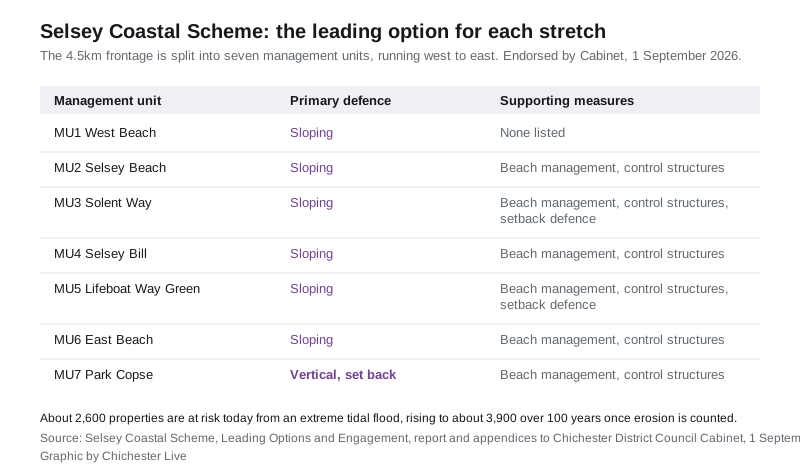
- that rises to about 3,900 properties over the next 100 years once erosion is counted
- many of the defences were built in the 1950s and have reached, or are reaching, the end of their design life
- the standard of protection they give is described as low
“Doing nothing is not a sustainable option,” the report says. It also warns that the scheme “will require significant changes to how parts of the coastline look and function”.
The leading option, stretch by stretch
The coast has been split into seven management units. For six of them the leading option is a primary sloping defence. Only Park Copse, at the eastern end, gets a vertical defence, and that one is set back from the shore.
Supporting measures vary by stretch. Beach management means adding, recycling or redistributing shingle to keep the beach wide enough to absorb wave energy. Beach control structures are groynes and similar works that hold shingle in place. Setback defences are a second line inland, which lets the front line be built lower.
Officers gave six reasons for choosing sloping rock over a vertical wall:
- it breaks up wave energy rather than reflecting it, so the defence can be lower
- it is safer to build, with less confined space working, work at height and tidal working
- it carries lower buildability risk and depends less on the season
- it takes less time to build than an equivalent vertical defence
- it can be raised or reprofiled later as sea levels rise
- it is generally the cheapest option, or close to it
Vertical defences were shortlisted and rejected. The report notes they reflect wave action, which can increase scour and erosion at the base, a real concern on a frontage as exposed as Selsey Bill.
The money is not secured
This is the part residents should watch. The option appraisal and outline design stage is fully funded by Flood Defence Grant in Aid from the Environment Agency. The next stage and the construction are not.
The scheme has to pass two more national funding gateways, an Outline Business Case and then a Full Business Case, in a competitive process. If the Full Business Case succeeds, Flood Defence Grant in Aid would cover 90% of construction, leaving a 10% local contribution. The council has put that local contribution into its draft Infrastructure Business Plan, to be met from the Community Infrastructure Levy paid by developers.
The council also confirms it is under no legal duty to act at all. It has permissive powers under the Land Drainage Act 1991 and the Coast Protection Act 1949, and will only use them where there is a clear economic benefit and the money exists. Whatever is built, the council picks up the long-term maintenance.
What the council admits you may not like
The report is unusually direct about the downsides:
- Height and views. Most defences will have to be raised above current levels. The visual impact will be lower at the western end, where properties sit on higher ground, and greater at East Beach, where ground levels are lower.
- Tight spots. Where there is very little room between properties and the foreshore, higher defences are likely.
- The beach itself. Defences may change how parts of the frontage look, and how people get to the sea. The council says it will keep public access where practicable and keep talking to the RNLI, fishers and beach users.
- Construction. Sourcing and moving large quantities of rock armour, site access and disruption during the works are all listed as risks.
One mitigation is worth noting, because it changes what gets built now: the council is exploring “adaptable solutions”, meaning building lower today and returning to raise the defences later.
What it means for you
- The public exhibition runs over three days in October 2026. Dates and the venue have not been published yet. The previous two rounds were held at the Selsey Centre.
- Feedback from that exhibition is used to pick the preferred options by the end of 2026. This is the stage at which residents can still change the design.
- Turnout has been strong before. The April 2025 events drew about 375 visitors and the April 2026 events about 260. Of those surveyed, 98% supported the shortlisted options.
- If you own land or an access along the frontage, expect to be approached. The council says ownership on the Selsey frontage is complex and some works will need access across land it does not own.
- Nothing here changes the separate West Beach seawall refurbishment already under way. We covered that in Selsey seawall works.
The report was written by Tom Day of Chichester District Council with Kirsty Klepacz and Rupert Teasdale of Coastal Partners, the shared coastal team that works for the council. The cabinet member is Cllr Jonathan Brown, deputy leader and cabinet member for environmental strategy.
Coastal Partners’ own Selsey updates page had not been updated with the leading options or the October dates when we checked on 9 September.
Have your say